What to Expect from a Senior Alumni Engagement Leader in the First 90 Days
This guide is the diagnostic to be developed in the first 90 days of a senior alumni engagement role.

A diagnostic framework for advancement professionals
You have watched it happen before. A new alumni engagement leader arrives. Within weeks, they announce a signature program, redesign an event, or unveil a strategic plan.
The hiring committee feels validated. The supervisor feels relieved. And the people who actually know the function watch it unfold with a sense that something has been skipped.
You know what comes next. The program collapses when the volunteer infrastructure can’t support it. The redesigned event conflicts with a dean who was never consulted. The strategy turns out to be built on a system that can’t measure whether anything is working.
You are watching a pattern repeat. Most leaders are asked to produce strategy before they understand the system they’ve inherited. That’s the mistake. Strong leaders diagnose – not to slow things down, to understand what can actually support what comes next.
Why this guide exists
Auditing chapter health, restructuring a board, building volunteer onboarding — none of these produce metrics that look like development metrics. They produce the conditions that make future solicitation possible. When the reporting relationship lacks clarity on what progress looks like in an operational function, leaders are pushed to produce visible output before the foundation can support it.
This is why the diagnostic matters beyond the alumni leader's own use. It is a communication tool — the thing that teaches a development-oriented supervisor what the function requires and what progress looks like before revenue signals appear. It also gives language to people who have been watching this pattern repeat and haven’t had a way to name it.
If you have ever sat in a meeting where a new leader announced a plan you knew was premature, this guide is the framework you didn't have at the time. A leader who can show what they found in their first 90 days – where the infrastructure is sound, where it's absent, and where it was built for a different era – is a leader who will build something that lasts. A leader who shows up with a plan before they've assessed the foundation is building on ground they haven't tested.
What strong leaders look for first
The difference is demonstrated in they pay attention to.
- What can actually be proven
(Where alumni are, who is reachable, and whether engagement is being measured in meaningful ways) - What has already been tried
(And whether it failed—or was never set up to succeed) - Where the work already lives
(Including the programs and relationships outside the central office) - How the volunteer system actually operates
(Not just on paper, but in practice) - What is driving current activity
(Including events, spending, and internal perception)
Who this is for
This is for advancement professionals who have watched new leaders move too quickly—and want a way to name what’s being skipped.
It’s also for hiring managers who want to understand what a strong first 90 days actually requires, and for candidates who want to get it right before they walk in.
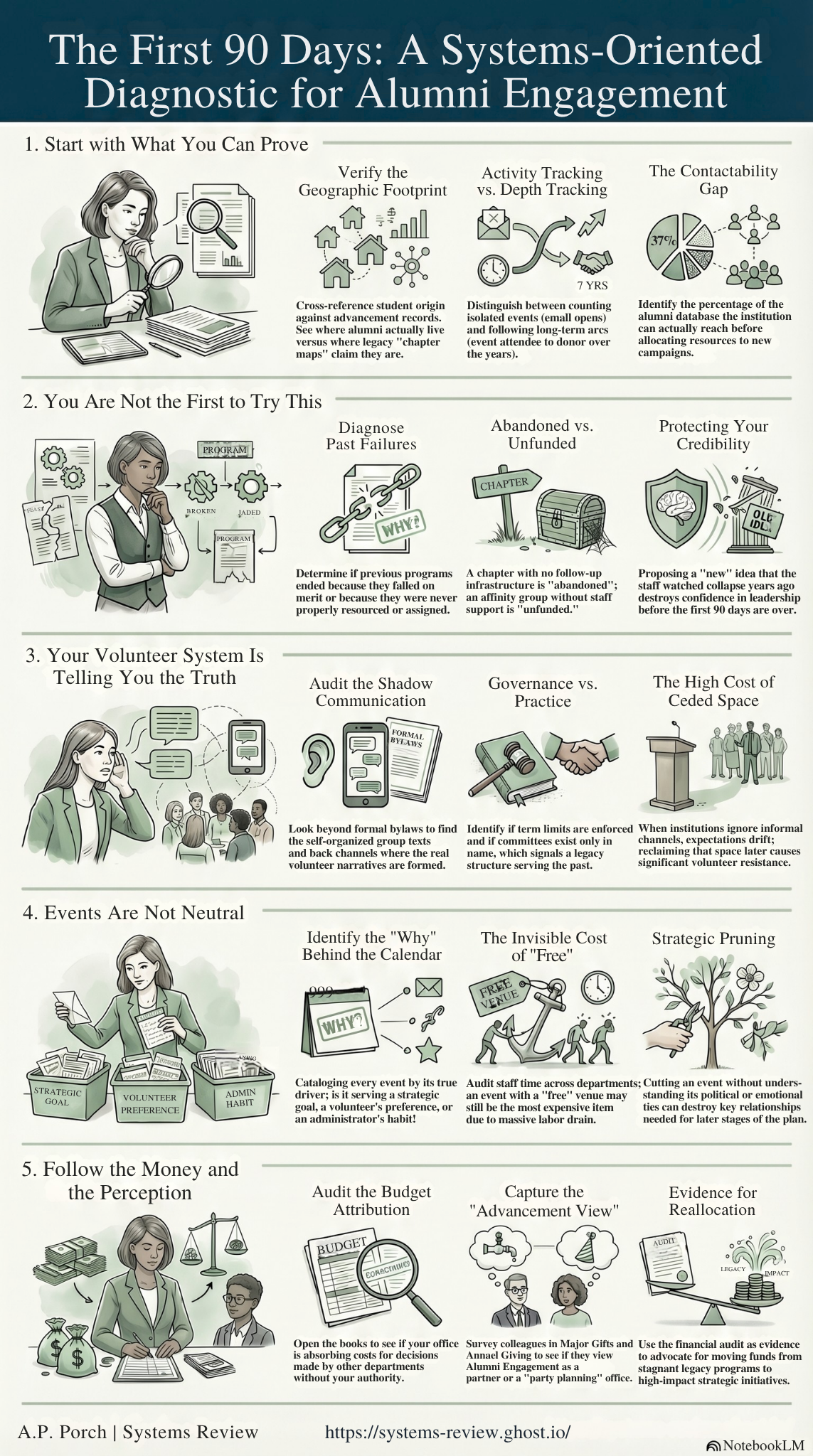
Get the diagnostic snapshot below. This guide introduces the core patterns that cause alumni engagement strategies to fail in the first 90 days—and how strong leaders identify them early.
If you haven't already, enter your email to access the download and receive Systems Review in your inbox. You can unsubscribe anytime.
[Download the guide] (visible to subscribers only)


