It's June. Your calendar is still crowded: fiscal year-end, reunions, staff transitions, conference season. Strategic planning gets deferred. Again.
Here's the problem: summer is the one of the only windows you actually get. Miss it, and you walk into next fiscal year carrying the same weaknesses you swore you'd fix.
The advancement shops that thrive treat summer as the few weeks where the year's hard lessons become structure.
Summer School is a method for doing exactly that—before time runs out.
What's Included
Six weekly lessons. One method. Everything you need to audit your portfolio, score every program against a consistent standard, make clear decisions about what to keep, and build the systems that prevent wasting next summer's review.
Module 1: Use the Lull
Why summer planning matters, and how to avoid wasting it. Understand the utility of viewing your programs as managed assets.
Module 2: Define the Portfolio
Four questions every program should answer: Purpose, Target Population, Defined Outcomes, Owner. Most programs in your shop can't answer all four right now.
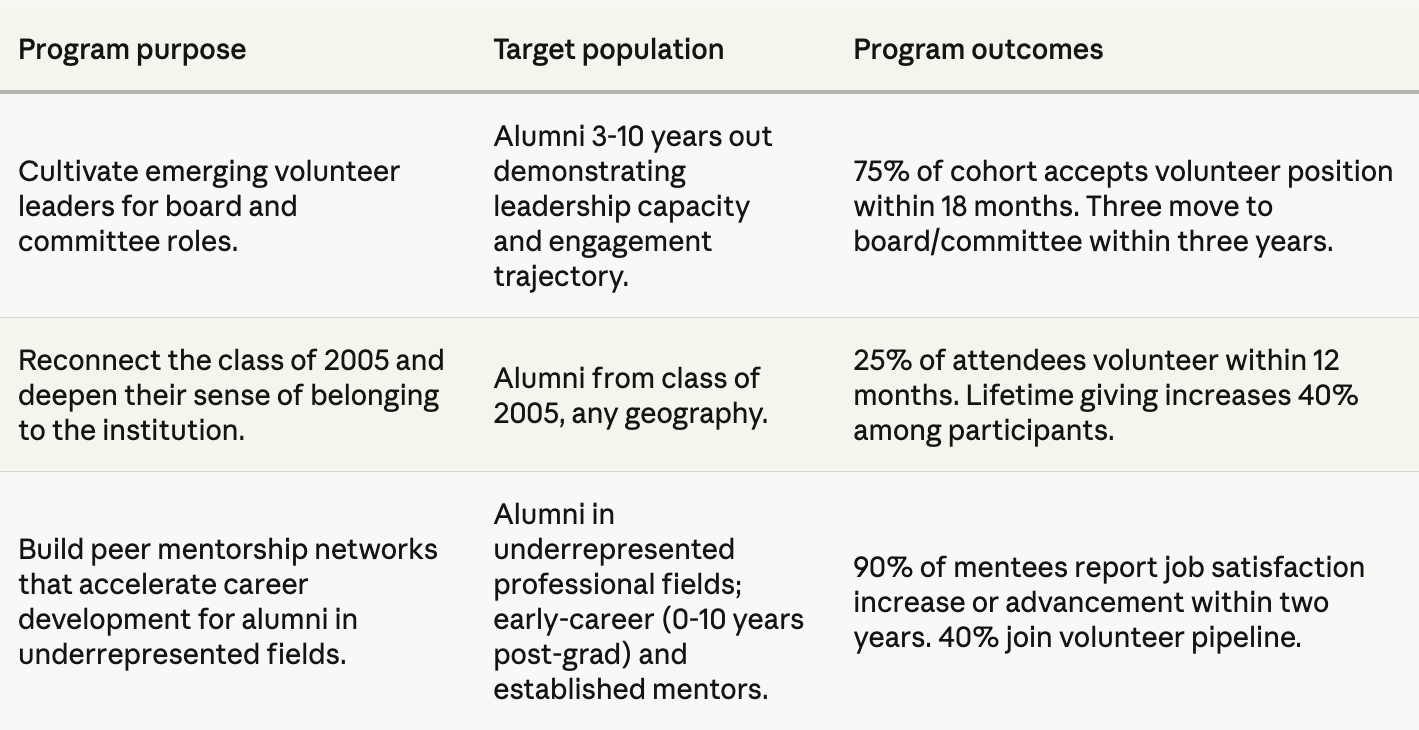
Module 3: The Core Evaluation Set
Criteria for scoring any program the same way—so a regional series and luncheon can fulfill the same standard. Strategic alignment. Participation quality. Sustainability.
Module 4: Apply the Lens
Lenses that shape every program's fate: how the rest of campus sees you, how the work actually runs, and the health of your partnerships. Named friction, addressed.
Module 5: Create Decision Pathways
The logic for routing every program to its pathway. Why alignment is a necessity—and what happens if you skip it.
Module 6: Build the Instrumentation
The tools that turn next summer's review into evidence-based decisions instead of memory and gut. The friction log, after-action reviews, and leadership rubric that keep you from rebuilding this every year.
What You'll Be Able to Do
After Summer School, you'll have:
- A repeatable method for auditing any portfolio of programs
- A framework for deciding what deserves resources, what needs redesign, and what should close
- Clarity on why certain programming decisions matter
Who This Is For
Summer School is for leaders who:
- Manage a portfolio of programs (alumni engagement, volunteer leadership, fundraising initiatives, regional networks, affinity communities)
- Know something is broken in how programs get evaluated and continued, but haven't had time to address it
- Are tired of defending program budgets based on attendance numbers or survey sentiment
- Want to make decisions based on strategy, not habit or the loudest voice in the room
If you've ever heard yourself say, "We don't have time to rethink this right now," this course is built for you.
How It Works
Starts: Week of June 14
Cadence: One lesson per week, delivered to your inbox.
Time: Each lesson is designed to read in less than 10 minutes.
Format: One lesson + one concrete example + worked frameworks you can reference. Everything you need to understand the method. Tools and implementation support are available separately.
Length: Six weeks. (After that, Systems Review shifts to biweekly issues on alumni strategy, organizational design, and constituent engagement.)
The Catch
Summer School teaches you a method. It doesn't do the work for you.
Your specific programs, your specific campus context, your specific constraints—that's your work.
The templates and tools that make implementation faster are available separately. But you won't need them to understand the method Summer School teaches.
Ready?
Six weeks. One method. Everything you need to stop grasping at straws, and start deciding.
The course starts the Week of June 17. If you join mid-series, you'll get access to all previous lessons.
Questions? Reply to any course email, or reach out directly at a.p.porch@proton.me.
Looking forward to the work.
— A.P.